BLOG

Menopause-image-RWWC-website.jpg

At Rittenhouse Women’s Wellness Center, we believe that menopause isn’t something women should “just deal with.” It’s a major life transition that deserves thoughtful, personalized care — across body, mind, and spirit. That’s why we’ve built a comprehensive support system for women entering perimenopause, menopause, and beyond — from medical to mental health, weight management to sexual wellness.

This month, we’re proud to spotlight the unique ways we help women feel strong, balanced, and in control during menopause.

Certified Menopause Providers Who Truly Understand

Three of our core providers — Candace Williams, CRNPKatie Olmstead, CRNP, and Leslie Saltzman, DO — are Certified Menopause Practitioners, which means they’ve received advanced training in the diagnosis, treatment, and management of menopause-related conditions.

This certification ensures that each patient receives:

  • Evidence-based care rooted in the latest research
  • A customized approach to hormone replacement therapy (HRT) — whether that’s estrogen, progesterone, testosterone, or non-hormonal alternatives
  • A clear, safe, and thoughtful plan to manage symptoms like hot flashes, brain fog, mood changes, sleep disturbances, and sexual health concerns

These providers don’t just “treat symptoms” — they partner with you to reclaim your vitality and wellness.

HRT & BHRT Options — Because Every Body Is Different

At RWWC, we offer traditional Hormone Replacement Therapy (HRT) for women whose symptoms and lab work indicate that this may be helpful.

But we also recognize that not every woman wants (or responds to) the same treatment. That’s why we offer Bioidentical Hormone Replacement Therapy (BHRT) through our partner, the Better Health & Wellness Weight Loss Center (BHWWC) using the Biote® pellet method.

With Biote® BHRT:

  • Small custom-compounded hormone pellets are inserted just beneath the skin
  • They release a consistent dose of hormone over several months — avoiding the peaks and valleys of pills or creams
  • Patients often report better energy, improved mood, better sleep, and increased libido

Learn more at www.bhwwc.com

Weight Loss Support: GLP-1 Therapies for Menopausal Weight Gain

Let’s be honest: hormonal shifts make it harder to maintain a healthy weight — especially in midlife.

At BHWWC, we offer GLP-1 therapies (including compounded semaglutide and tirzepatide) as part of a supervised medical weight loss program for women experiencing menopause-related weight gain. These medications:

  • Reduce appetite and food cravings
  • Improve insulin resistance
  • Help the body burn fat more efficiently

We pair these medications with regular monitoring and coaching to ensure long-term success.

Mental Health & Emotional Support

Menopause isn’t just physical. Many women experience:

  • Mood swings
  • Anxiety
  • Sleep disturbances
  • Brain fog
  • Emotional shifts or grief around aging

That’s why we’re proud to have Dr. Courtney Liggera, a board-certified clinical psychologist, available at RWWC. She works with women one-on-one to help process and manage the emotional changes that can accompany this phase of life — with compassion, perspective, and actionable support.

Sexual Wellness: The O-Shot

One of the most under-discussed effects of menopause is its impact on sex and intimacy. Women often experience:

  • Decreased libido
  • Vaginal dryness or discomfort
  • Urinary urgency or leakage

Dr. Gayln Faust, our board-certified gynecologist, offers the O-Shot® — an innovative, non-surgical treatment using your body’s own platelet-rich plasma (PRP) to stimulate vaginal tissue regeneration. Many women report:

  • Increased sexual desire
  • More comfortable intimacy
  • Improved natural lubrication
  • Reduced urinary incontinence

It’s just one more way we help women feel confident and connected.

A Message to Every Woman Navigating This Stage of Life

You don’t have to go through menopause alone — or in silence.

At Rittenhouse Women’s Wellness Center, we’re here to listen, support, and personalize your care. Whether it’s relief from physical symptoms, help managing weight, support for your emotional wellbeing, or finding joy in intimacy again — we have the expertise, compassion, and tools to help.

This is your time. Let’s make it vibrant.

Learn more or schedule an appointment at www.rwwc.com
Call us to speak with a patient coordinator: 215-735-7992
Located in the heart of Rittenhouse Square


glp1-newsletter-photo-rwwc-1200x794.jpg

GLP-1 medications are changing the landscape of metabolic care, and for many women, they offer more than just weight loss. Whether you’re navigating menopause, managing PCOS, or thinking about fertility, these medications may play a meaningful role in your health journey.

GLP-1s work by slowing digestion, which helps regulate appetite and reduce “food noise.” That same mechanism can affect how birth control pills are absorbed, so we recommend backup contraception during dose changes. For women with PCOS or insulin resistance, GLP-1s may help restore ovulation. This can be a welcome benefit if you’re trying to conceive, and an important consideration if you’re not.

For postmenopausal women, GLP-1s can support insulin sensitivity, reduce visceral fat, and lower cardiovascular risk. These are all areas impacted by declining estrogen. However, for metabolically healthy women considering GLP-1s for modest weight loss, the risks may outweigh the benefits. These medications must be stopped one to two months before trying to conceive and are not safe during pregnancy or breastfeeding.

At Rittenhouse, we believe in personalized care. That means looking beyond BMI to assess inflammation, insulin resistance, family history, and lifestyle. GLP-1s may be appropriate even at lower weights, but only when they align with your broader health goals.

The future of GLP-1s includes oral options, generics, and expanded use for heart health, inflammation, and even addiction. The most important shift is moving toward care that is tailored to you—your biology, your values, and your life.

If you’re curious about whether GLP-1s are right for you, our providers are here to guide you through every step with clarity, compassion, and clinical expertise.


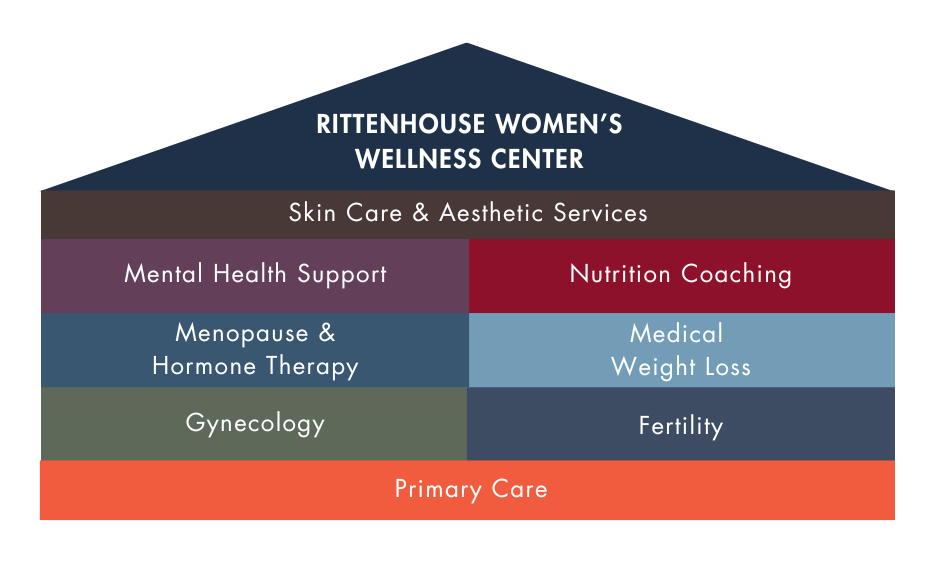
rwwc-SERVICES-e1754328195317.png

August is National Wellness Month—a 31-day invitation to slow down, tune in, and invest in habits that help you thrive. At Rittenhouse Women’s Wellness Center, every service under our roof is designed with that same mission in mind: caring for the whole woman, at every life stage, all in one convenient Rittenhouse Square location.

Primary Care—Your Health Home Base
Whether it’s a same-day sick visit, a preventive screening, or long-term management of hypertension or diabetes, our board-certified providers listen first and treat second—so your health plan reflects your real life.

Gynecology & Fertility
From annual exams and birth-control consults to pre-conception counseling and fertility work-ups, our gynecologists provide evidence-based guidance with the warmth you’d expect from a longtime friend.

Menopause & Hormone Therapy
Experiencing hot flashes, mood swings, or sleep changes? Certified Menopause Providers offer both bio-identical and traditional hormone-replacement options to restore balance and keep you active.

Medical Weight Loss
Our partnership with Better Health & Wellness Weight-Loss Center brings physician-supervised GLP-1 treatments like Semaglutide together with weekly nutrition coaching—so you lose weight safely and sustainably.

Mental Health Support
Life transitions, career stress, postpartum emotions—whatever you’re facing, our in-house therapists and wellness counselors tailor sessions to your goals, not generic checklists.

Nutrition Coaching
Work one-on-one with our Registered Dietitian to build meal plans you’ll actually enjoy, decode lab work, and turn “eat better” into a step-by-step strategy.

Skin Care & Aesthetic Services
Dermacenter’s medical-grade facials, lasers, and injectables help you glow with the same confidence you feel on the inside—because radiance is part of wellness, too.


How We Make Wellness Work for You

All-Women Team, Whole-Person View. Our providers collaborate daily.

Flexible Scheduling. Early-morning, lunchtime, and evening appointments mean self-care fits your calendar, not the other way around.

One Roof, One Record. Integrated electronic records let us spot patterns, close gaps, and celebrate wins together.


Your August Action Plan

  1. Book Your Annual or Follow-Up Visit. Preventive care is the cornerstone of longevity. Secure a slot before the fall rush.
  2. Add a Wellness “Plus-One.” Tack a nutrition, psychology, or skin-care consult onto the same trip—maximize convenience, multiply results.

Ready to celebrate you? Call 215-735-7992, tap “Schedule Appointment” at RWWC.com, or reply to this email and our concierge team will handle the rest.

Here’s to a month—and a lifetime—of feeling your best.

With care,
The Rittenhouse Women’s Wellness Center Team


Womens-Health-Female-2-IG.jpg

Here’s what to know — and how to find treatment options to help.

Menopause is often referred to as the great ‘change of life,’ but it’s not something that happens overnight, where boom, you no longer have a period. The process of transitioning to menopause, called perimenopause, starts gradually with symptoms appearing years before you have your last menstrual cycle. For some people, the hormone-related symptoms, like irregular periods, mood changes, and hot flashes, may be a dead giveaway, but others may already be in perimenopause and not even realize it.

That’s because perimenopause looks different in every woman. One person might experience prominent hot flashes, while another might not have connected the dots between her sudden bouts of insomnia and perimenopause. Even famous people with access to the best medical care can miss the signs of perimenopause, says Dr. Bruce Dorr, an OB-GYN and senior medical advisor to Biote. For example, Oprah went three years thinking she had a heart condition with no improvements in her symptoms until she went on hormone replacement therapy. Turns out, the culprit was low estrogen.

You may be reading this article right now to get a sense of what’s going on in your body. Or maybe you’re at the age when people start seeing signs of perimenopause and want to get ahead of things. Regardless, it can feel daunting if you’re unsure of what’s to come. Understanding perimenopause symptoms will make you better prepared for this natural biological process.

What happens during perimenopause?

During perimenopause, the ovaries slow down production of estrogen, and don’t release as many eggs, as you slowly lose the ability to get pregnant. These hormonal changes can cause a number of physical and mental health symptoms as your body tries to adjust to this new normal.

Perimenopause symptoms typically happen between the ages of 45 and 55 — though some women may experience it as early as in their mid-30s. The average duration is about 7 years. However, depending on other factors such as smoking and racial background, some women have reported it lasting for up to 14 years. Perimenopause officially ends when when you’ve gone 12 months without a period, which officially signals menopause.

Many of the changes you experience during perimenopause are a result of decreasing estrogen, which along with progesterone rises and falls as you make your way to menopause.

What are the symptoms?

Everyone’s symptoms can be different, but one of the most tell-tale signs you’re entering perimenopause is irregular menstrual cycles. Since your estrogen levels are rising and falling at uneven levels, this results in shorter and longer periods. And while you may also see months where your menstrual cycle is skipped completely, there is still a possibility of getting pregnant during perimenopause. “During perimenopause, women may still have bleeding; however, they may start to have symptoms that are signaling a decrease in estrogen, such as hot flashes, night sweats, and changes in weight, among other symptoms,” says Dr. Jessica Shepherd, an OB-GYN and Flow council member. Here are some other symptoms you can expect.

Hot flashes and night sweats. Most perimenopause symptoms will look similar to the ones women experience during menopause. Dr. Dorr says women often report hot flashes that feel like a sudden warmth coming from the shoulders up. Chills and night sweats that are heavy enough to soak your pajamas and blankets often accompany hot flashes.

Unexplained weight gain. Perimenopause is a time when women start to move from a pear-shaped to an apple-shaped figure. Most women undergoing perimenopause gain about five to ten pounds. This is because estrogen helps regulate metabolic health, so when it slows down, your metabolism does too. The excess calories that are not processed are more likely to be stored as fat in the abdomen area. 

Indirectly, women may experience weight gain during this time because they have little energy to exercise. The fall of estrogen causes a hormone imbalance that ends up affecting the adrenal and thyroid-producing hormones, which regulate energy.

Sexual changes. Fluctuations in sexual behavior are another sign of perimenopause. Estrogen is needed to keep your vagina lubricated. With falling levels, there’s less blood flow to the vagina resulting in vaginal dryness and potentially painful sex. Apart from the pain, perimenopause can zap your sex drive. Reduced estrogen levels may lessen the desire to have sex and make it more difficult to get sexually aroused. The unintended weight gain and trouble sleeping may also dull any desire to have sexual intercourse if people feel especially tired or self-conscious about their body image, says Dr. Dorr.

Brain fog. You may have trouble thinking clearly, concentrating, and memory problems. This is normal, promise. The fuzzy-headed sensation is the result of hormonal changes and the effects of sleep deprivation, another indicator of perimenopause.

Reducing perimenopause symptoms

There’s a lot you can do from a diet and lifestyle perspective to reduce your perimenopause symptoms. These are some places to start:

Get 7 to 8 hours of sleep. Regular sleep can help with the brain fog women experience during perimenopause. Though with night sweats, insomnia, and stress, this is easier said than done. Treating menopause symptoms through hormone therapy or other treatments can help you get a good night’s sleep. Sticking to a regular sleep schedule and not using electronics 30 minutes before bed can improve your chances of sleep.

Reduce your coffee and soda intake. There is research that linked caffeine with worsening vasomotor symptoms. This includes more severe hot flashes and night sweats. Caffeine also stimulates the body and makes it harder to fall asleep, adds Dr. Dorr.

Diet. Eating a fiber-rich diet can boost a healthy metabolism and potentially avoid the weight gain that often occurs during perimenopause. Since bones get weaker during perimenopause, women should consider adding more calcium-rich foods such as dairy products, almonds, and leafy vegetables.

Exercise. Staying in shape is a must when going through perimenopause. Aerobic activities such as a brisk walk around the park, biking, or dancing can boost your cognition and burn body fat. Mixing your routine up with strength training two or three times a week will further help rev up your metabolism along with strengthening bones and muscles to avoid serious injuries from falls. Exercise can also make you tired enough to fall asleep at night.

When to see a doctor

Women should be proactive and start discussions with their healthcare providers in their 40s, even before symptoms begin, Dr. Shepherd says. Doing so could make the perimenopause journey more manageable. “Noticing when the symptoms of perimenopause are beginning should be an important part of the conversation so that it provides solutions as well as comfort during this transition,” she says.

If you’re unsure whether or not your symptoms are related to perimenopause, it doesn’t hurt to get a second opinion from a medical professional. Just make sure it’s someone trained in menopausal care.

About “80 percent of residency programs that are training OB-GYNs don’t have any education in menopause, and for the majority of the 20 percent of programs remaining, that education is only elective,” says Dr. Dorr. He recommends asking your doctor what they know about hormone replacement therapy and finding a new one if that’s something they don’t prescribe. A menopause specialist would do a physical check-up including taking a medical history of your last few menstrual cycles and when your symptoms first began. They may also perform a blood test to measure your hormone levels.

Seeing a doctor for perimenopause is also helpful if you’re not finding relief on your own or the symptoms become so severe they affect your quality of life. Your healthcare provider may recommend systemic estrogen therapy. This hormone treatment — which includes low-dose birth control pills, skin patches, gel, or cream — can help manage the discomfort that comes with night sweats and hot flashes. The vaginal ring and cream have also helped with finding relief against vaginal dryness.

“If your quality of life is suffering, there are different options out there,” adds Dr. Dorr. “If you’re not exercising anymore, if you’re not having sex anymore, or if you’re not sleeping right, those are all signs that you should be seeking professional help now.”


A Note from RWWC

“Since our founding in 2008, our goal has been to provide primary care for women. Our team of physicians and nurse practitioners are dedicated to providing preventive care, diagnosis and treatment of acute and chronic disease(s) and coordination of care with specialists.”

Contact Us

Copyright by Rittenhouse Women's Wellness Center. All rights reserved.